Online platform, self paced

Heat Pump Journey

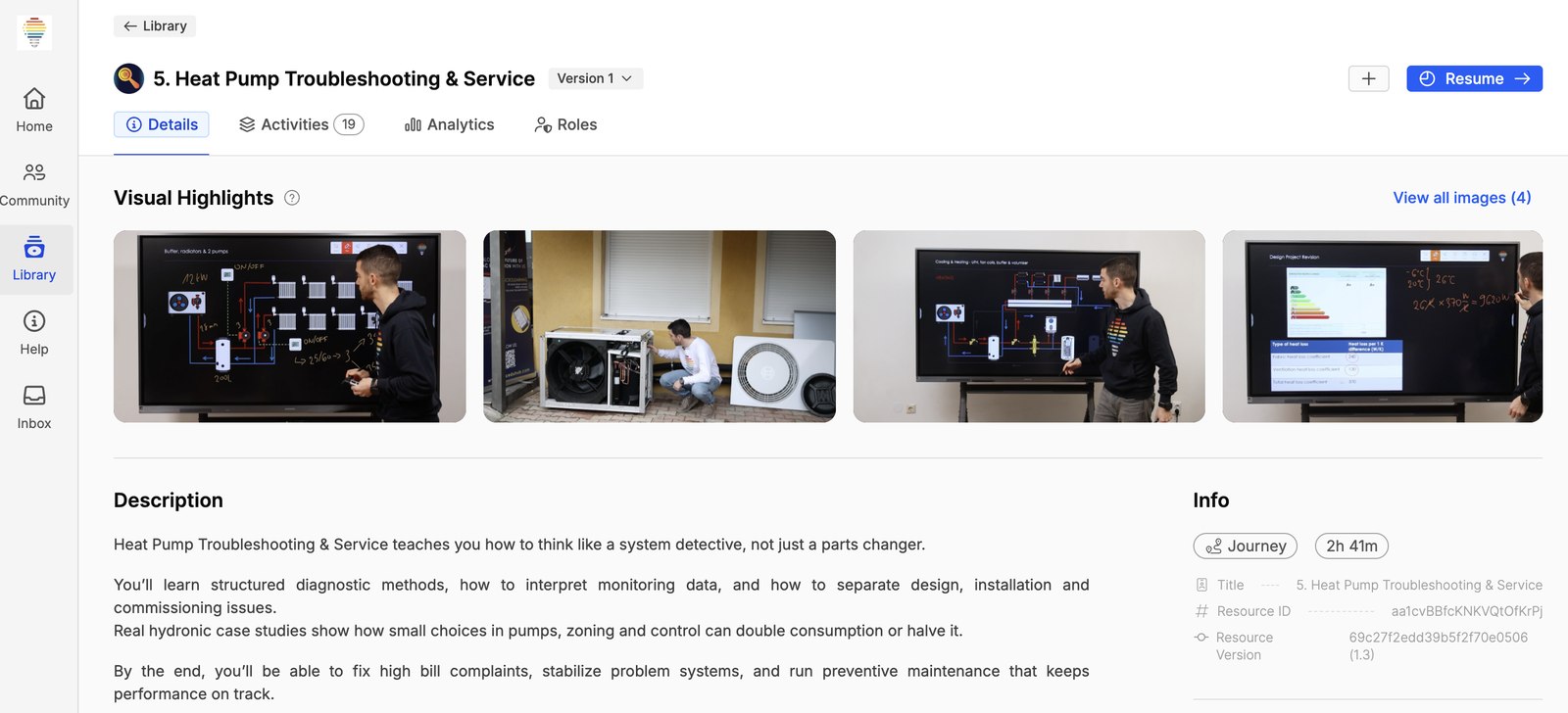
6 courses, 100 microlearnings, around 20 hours. Everything from the refrigerant cycle to commissioning and fault diagnosis, in lessons of 5 to 15 minutes.

Heat Pump Journey
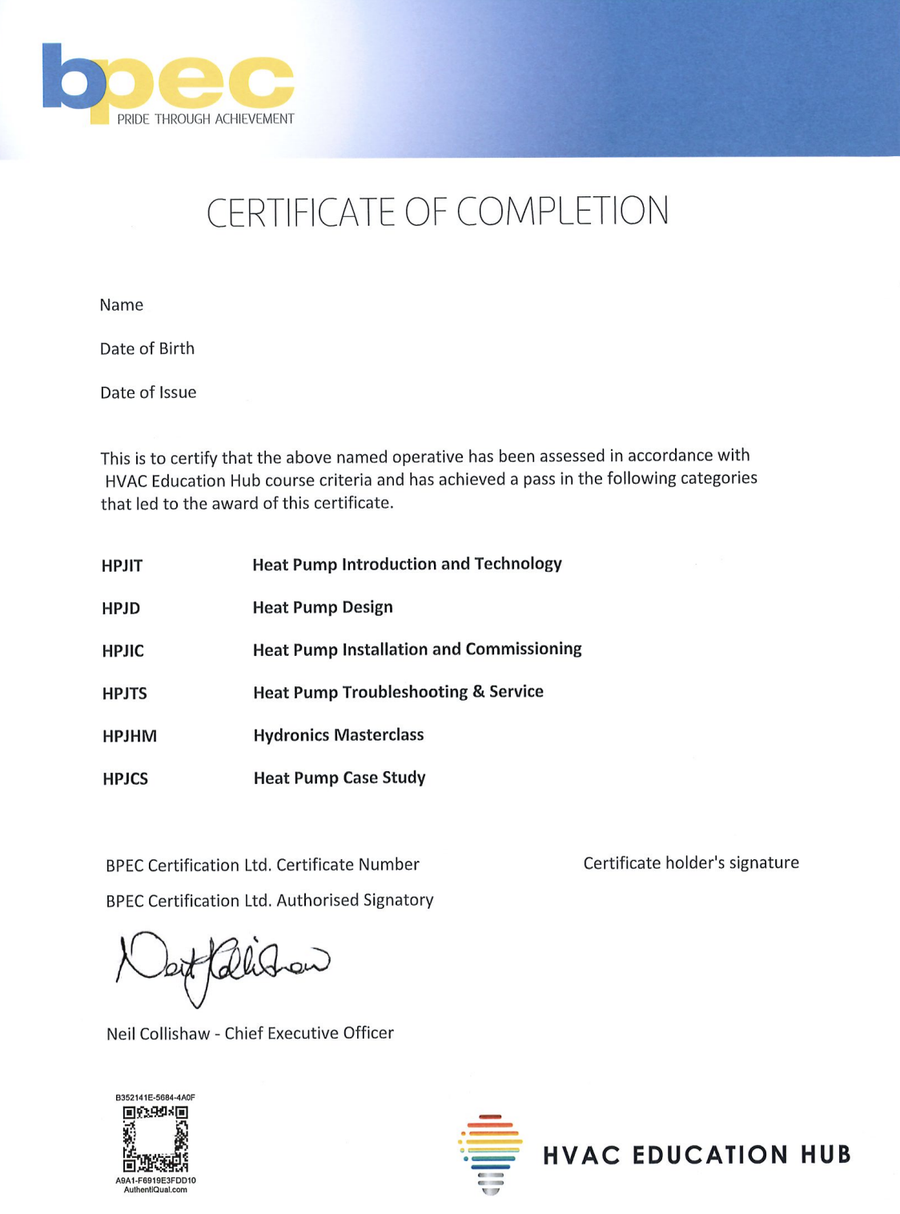
BPEC certificate

BPEC certified

The course is BPEC certified, which matters if you are learning in the UK. Your hours count towards recognised professional development rather than disappearing into a folder of unverified certificates.

01The curriculum

Six courses, in the order the system works.

Tap any course to see every lesson inside it.

The physics behind the machine. The refrigerant cycle in depth, every key component, refrigerant properties, and the efficiency metrics you meet daily — COP, SCOP, EER, SEER, SPF. Plus F-Gas regulation and how heat pumps compare with gas on cost and emissions.

Module 1: Fundamentals

  • What is a heat pump?
  • Types of heat pumps
  • Power and energy
  • Laws of thermodynamics
  • Heat and temperature
  • Phase change

Module 2: Refrigerant cycle

  • Refrigerant cycle
  • Evaporator
  • Compressor
  • Condenser
  • Expansion valve
  • Four-way valve
  • Refrigerants and properties

Module 3: Efficiency & regulations

  • COP, SCOP, EER, SEER, SPF
  • Heat pump vs fossil fuel
  • Electricity-to-gas price ratio
  • F-Gas regulation

The full design process: fabric, ventilation and infiltration losses; selecting the right size accounting for modulation and part-load; pipe sizing and pressure drop; and sizing radiators, underfloor heating, fan-coils and domestic hot water. By the end you can produce a complete design from scratch and defend it technically.

Module 1: Heat loss

  • What is heat loss?
  • Fabric heat loss
  • U-values & R-values
  • Ventilation & infiltration
  • MVHR
  • Climate & design temperatures
  • Modulation & part-load
  • Cooling load principles

Module 2: Flow & pipe sizing

  • Low-temperature system design
  • Delta-T
  • Capacity and flow rate
  • Pipe sizing
  • Pressure drop calculation
  • Index circuit

Module 3: Emitters & DHW

  • Radiators
  • Underfloor heating
  • Fan-coils
  • DHW fundamentals
  • DHW sizing: volume & reheat
  • DHW integration

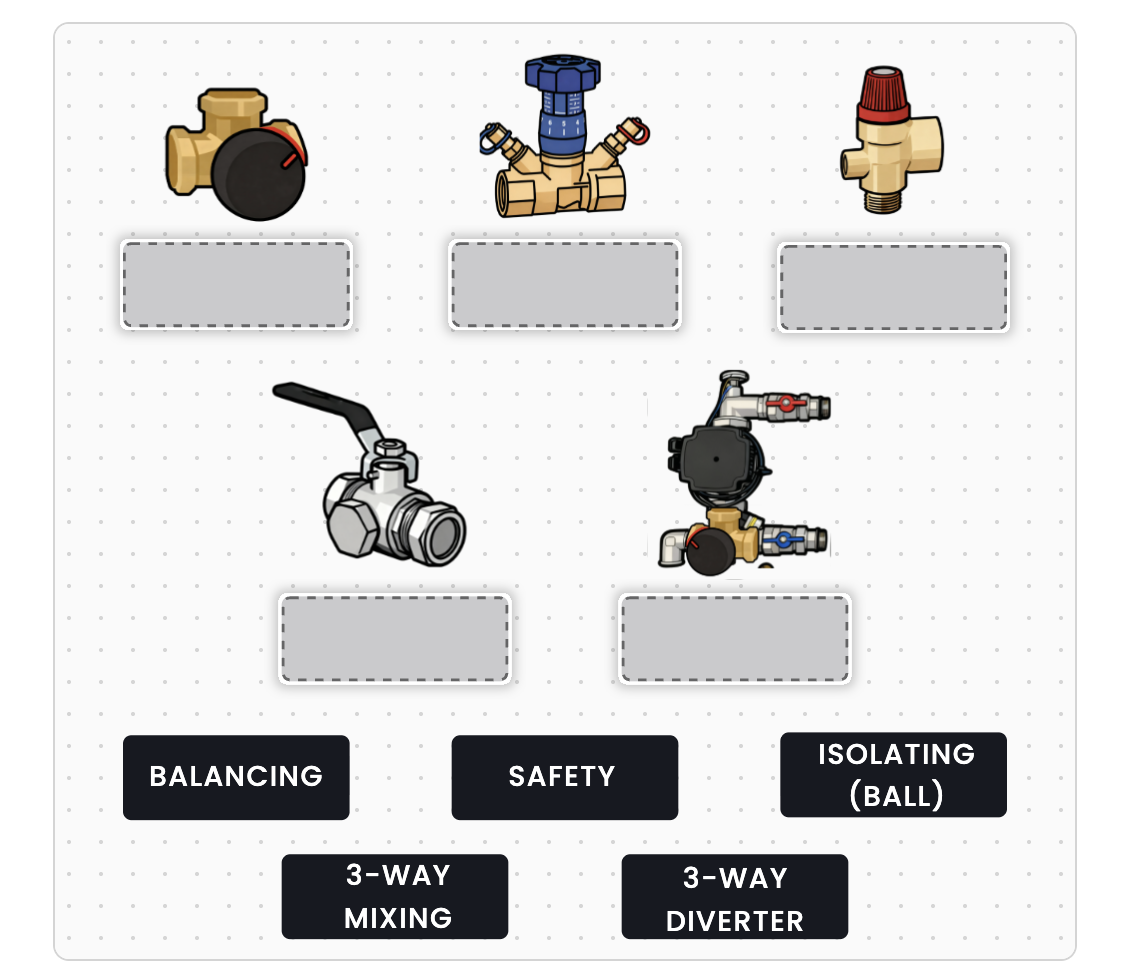
Most heat pump problems are not refrigerant problems — they are hydronic problems. Pump curves, pump sizing in single, parallel and series, Kv-values and valve sizing, system water volume, and the most misunderstood topics in the industry: hydraulic separation, buffer tanks, volumisers and expansion vessels.

Module 1: Pumps, valves & balancing

  • Reading & using pump curves
  • Types of pumps
  • Sizing: single, parallel & series
  • Valve types
  • Kv-value & valve sizing
  • Balancing

Module 2: Water volume & hydraulics

  • Water volume & flow rate
  • Open loop system
  • Hydraulic separation vs volumiser
  • Buffer in depth
  • Zoning and system volume

Module 3: Final system design

  • Expansion vessels
  • Thermostatic valves
  • Outdoor protection
  • Additional components
  • Combining components
  • System sizing
  • How to read technical data

A well-designed system can still fail if installation and commissioning are done badly. Site assessment, outdoor unit positioning, safe electrical connection, water quality and control wiring — then a detailed commissioning section covering filling and venting, flow rate setting, weather compensation, DHW configuration and backup heater logic.

Module 1: Installation

  • Site survey
  • Outdoor installation
  • Indoor installation
  • Water quality
  • Cooling difference
  • Electrical installation

Module 2: Control strategy

  • Control theory
  • PCB & control wiring
  • Load & weather compensation
  • Radiator & UFH control
  • Modulation

Module 3: Commissioning

  • Filling & venting
  • Basic functions
  • System setup
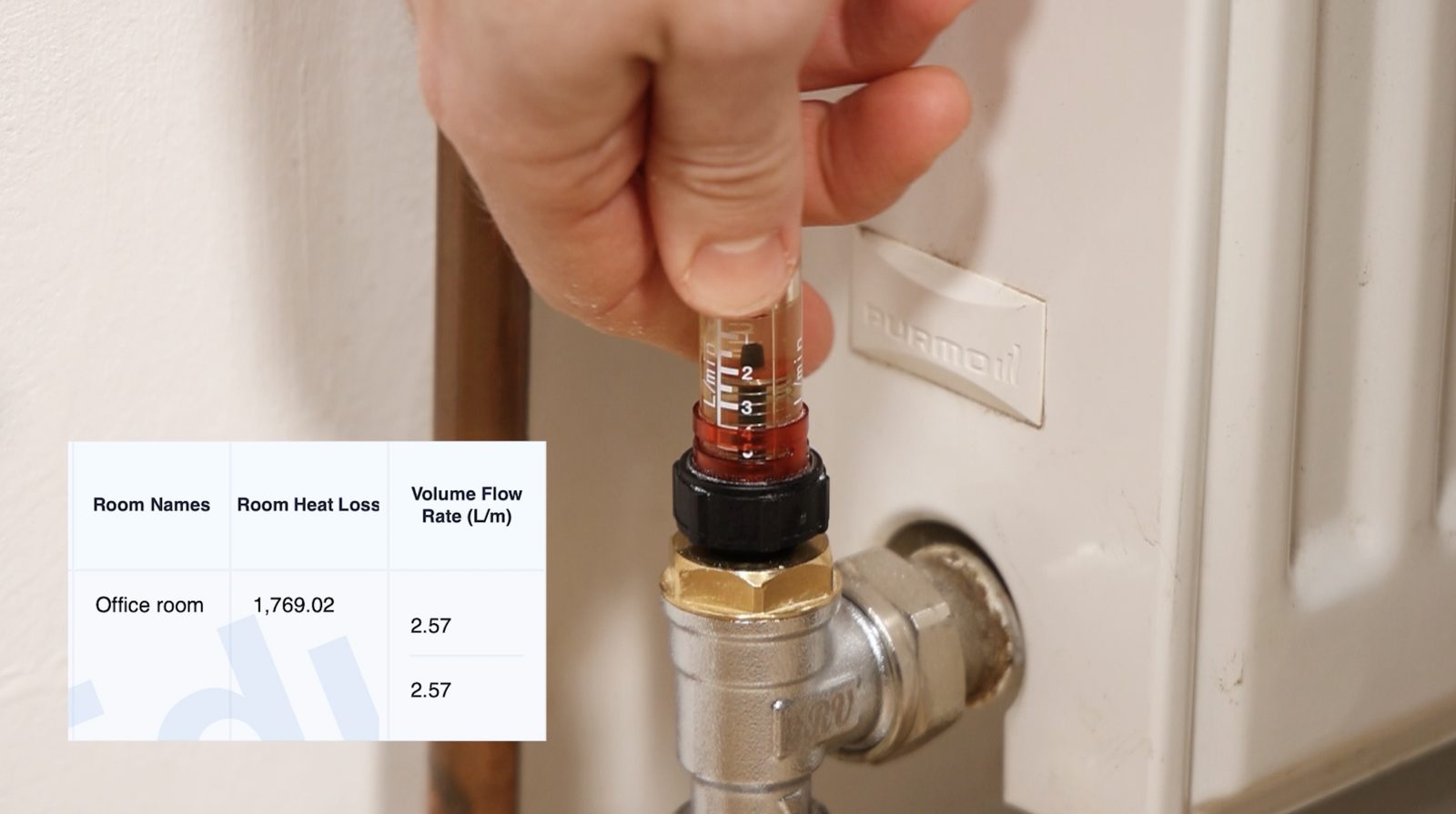
  • Pump & flow rate
  • DHW setup
  • Backup heater
  • Advanced functions

A structured diagnostic method: whole-system analysis, reading monitoring data, identifying hydronic issues, and working through the most common real-world scenarios. The service section covers a complete annual checklist — electrical, refrigerant, mechanical, outdoor unit, indoor components and performance logging.

Module 1: Diagnostic & analysis

  • Whole system analysis
  • Diagnostic approach
  • How to analyse data
  • System monitoring
  • Efficient radiator system
  • Efficient UFH system

Module 2: Hydronic examples

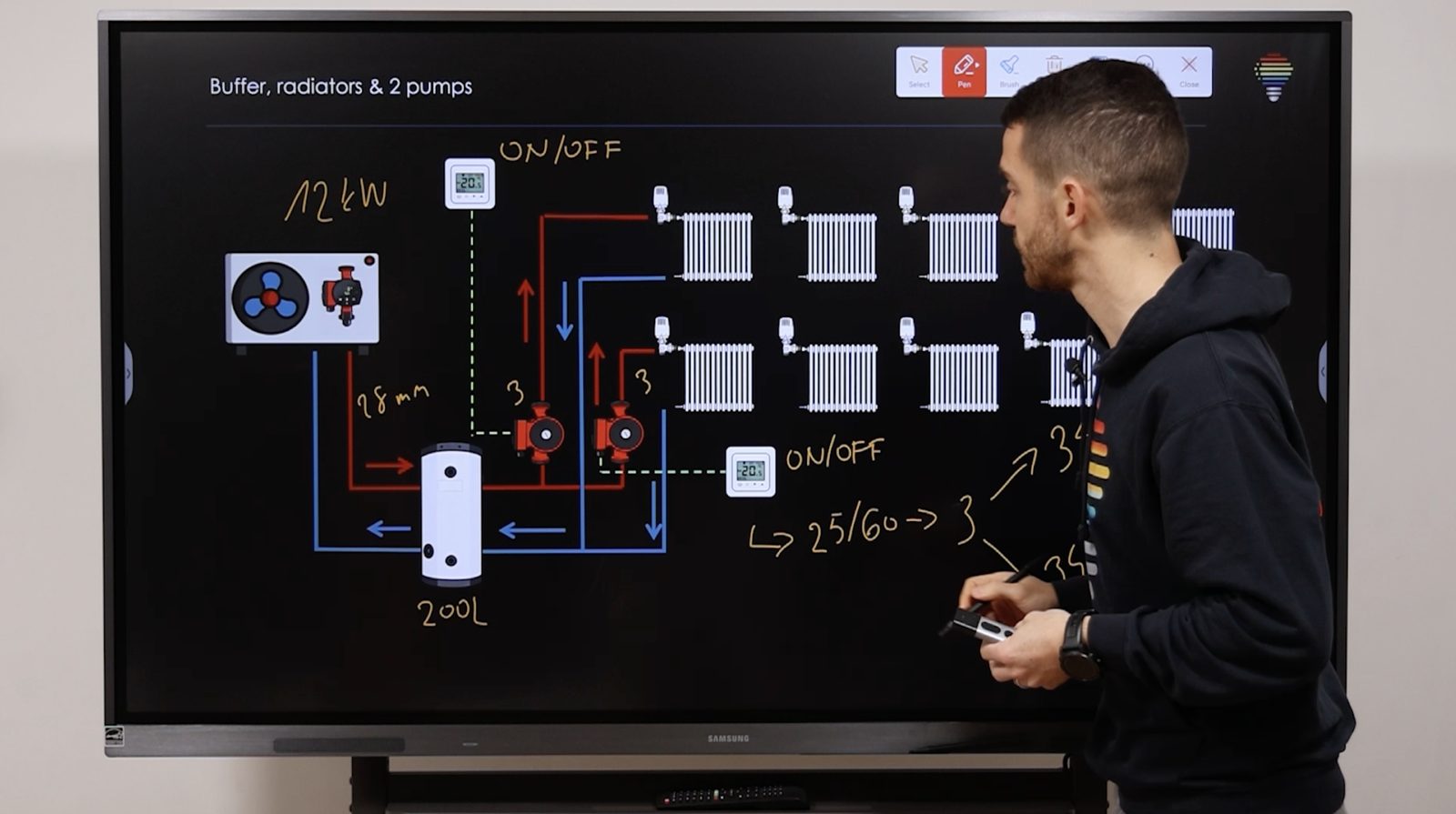
  • Buffer, radiators & 2 pumps
  • One pump system with zones
  • Cooling & heating combined
  • DHW high demand
  • Hydraulic separation & UFH
  • Design project revision

Module 3: Regular service

  • Annual service checklist
  • Electrical checks
  • Refrigerant checks
  • Mechanical checks
  • Outdoor unit
  • Indoor components
  • DHW checks
  • Performance & system log

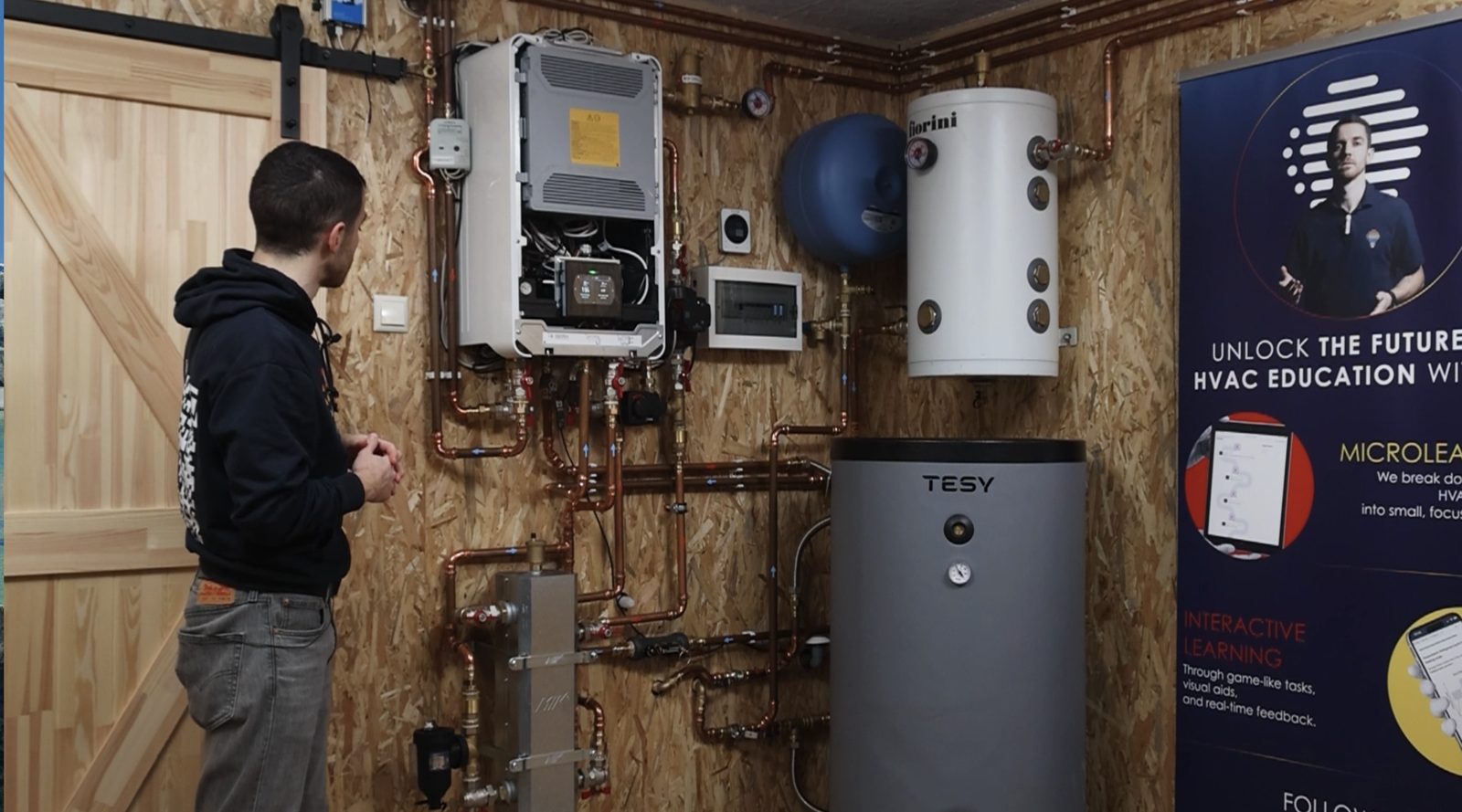
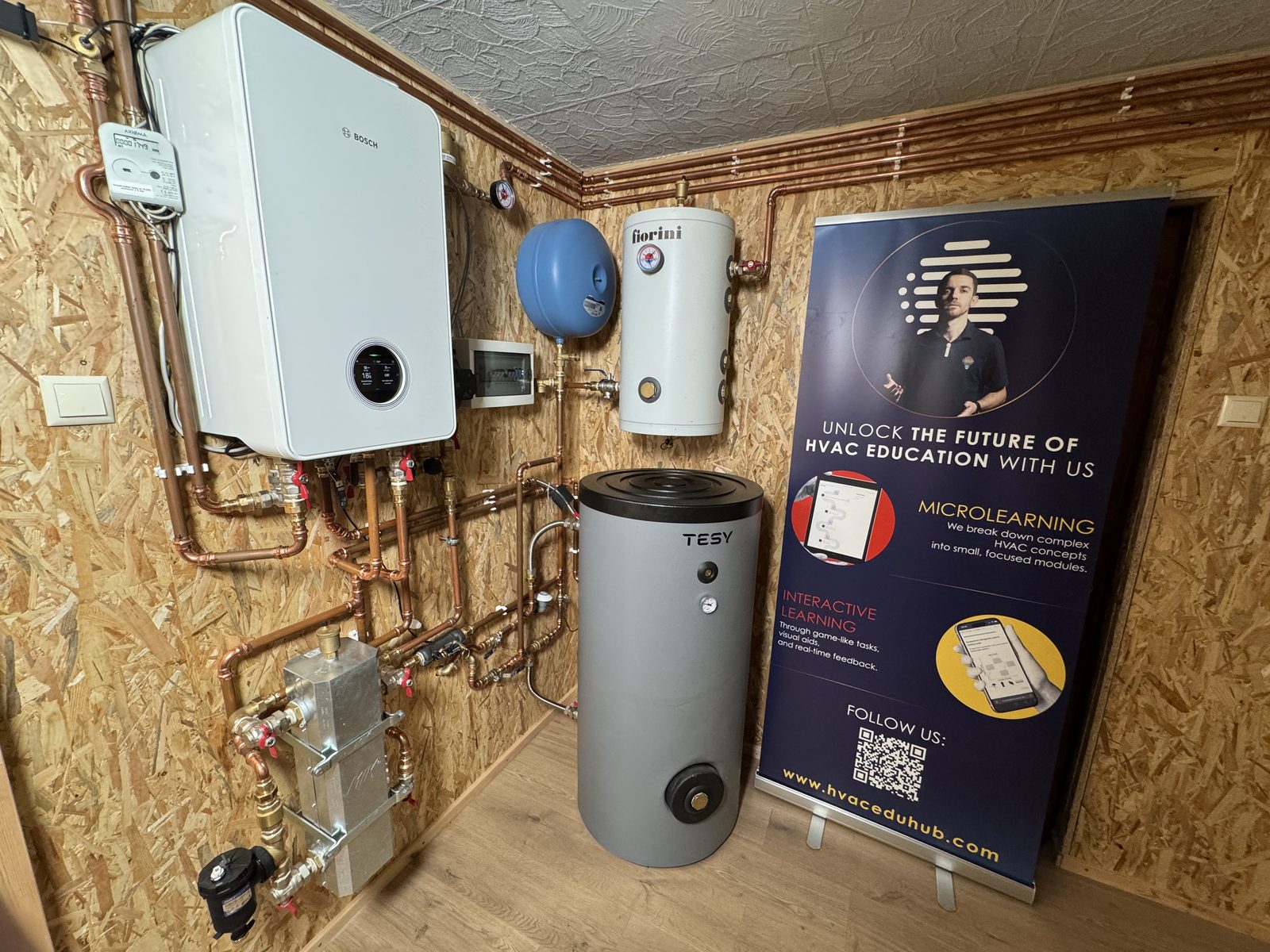
Where theory meets reality. Follow one complete project from initial design through indoor and outdoor installation, commissioning, balancing and final monitoring. It ties together everything from the previous five courses and shows how each step connects on a real site.

Module 1: Real installation walkthrough

  • Design
  • Indoor installation
  • Outdoor installation
  • Commissioning
  • Balancing
  • Monitoring
?

Assessment, straight from the platform

Drag and drop the correct flow, return and delta T temperatures for the gas boiler (left) and heat pump (right). This one solves itself — on the platform, you do the dragging.

40℃
dT
Flow
Return
50℃ 20℃ 30℃
40℃
dT
Flow
Return
37,5℃ 5℃ 42,5℃
Correct! Lower flow temperature, higher COP.

Interactive assessments like this one are built into every course on the platform.

02Pricing

One price, twelve months, everything.

No card needed

Heat Pump Kickstart

Free

7 lessons, 1h 15m

  • See exactly how the platform works
  • Real lessons, not a demo
  • Interactive assessments included
Start free

Most popular

Full Journey

12 months, one learner

  • All 6 courses, 100 microlearnings
  • Around 20 hours of content
  • Certificate of completion, BPEC certified
  • PDF curriculum, 200+ pages
  • Bonus case study course
Get full access

For teams

Corporate

On request

Priced per seat, per year

  • Deploy to the whole team at once
  • Custom-branded platform, your domain
  • Content tailored to your products
  • Analytics per learner
  • Free discovery workshop
Corporate options →

Not sure yet?

Take the free 7 lessons. If it is not for you, you have lost 75 minutes and nothing else.